What should I do if I see a procession of caterpillars?
Don't touch it and keep your distance. Move children and pets away immediately, as the urticating hairs can be released even without direct contact. Don't try to sweep, crush or burn them. If the procession is on your property, have a professional secure and treat it. In case of contact with a person or animal, apply first-aid measures and see a doctor or vet quickly if needed.
How do I recognise a processionary caterpillar?
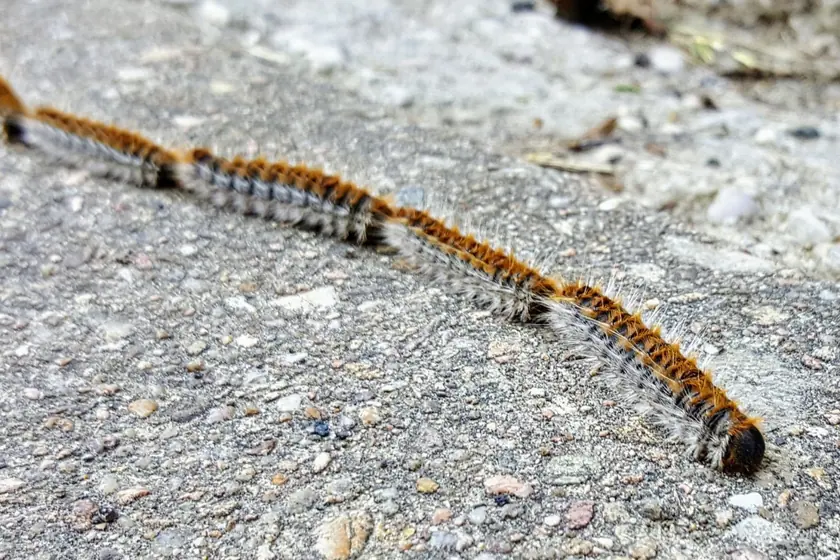
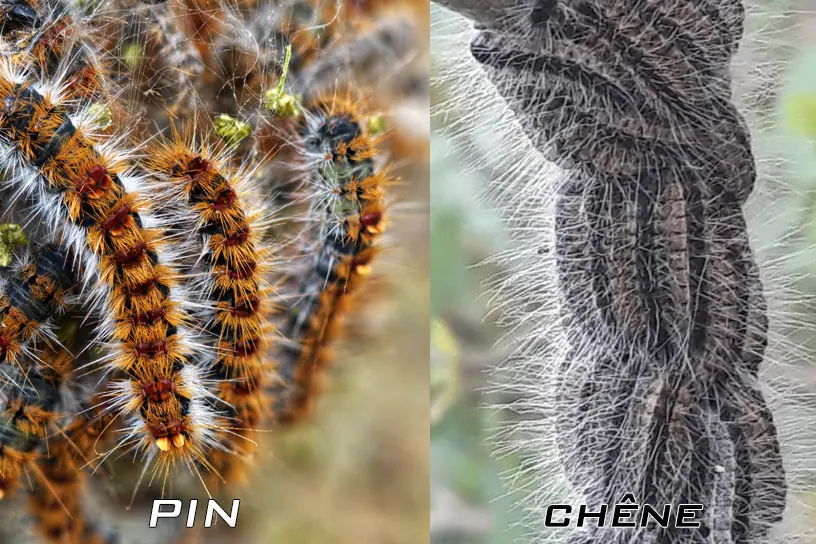
Processionary caterpillars are hairy and live in groups. The pine processionary is orange-brown and often comes down from trees in single file at the end of winter. The oak one is greyer and lives mainly on oaks.
What's the difference between the pine and oak processionary?
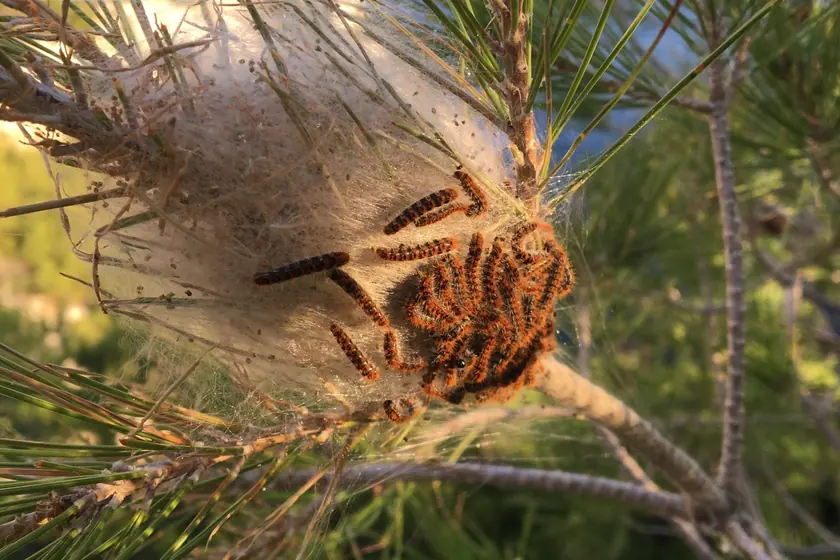
The pine processionary lives on pines and builds large white silk nests at the tips of the branches. It then comes down to the ground in procession to bury itself. The oak processionary lives on oaks; its nests are pressed against the trunk or under the large branches, and it moves on the ground much less.
How do I recognise a nest?
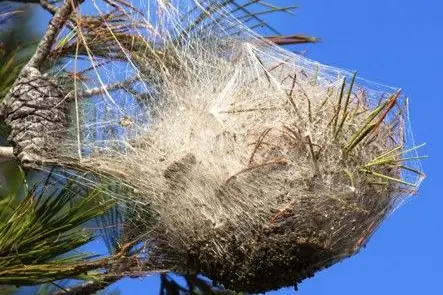
The pine processionary's nest looks like a big ball or spindle of white silk, often clearly visible in the sunny parts of the pine. The oak processionary's nest is more discreet, whitish-grey, pressed against the trunk or the large branches.
Why are processionary caterpillars dangerous?
The danger doesn't come from bites but from their thousands of urticating hairs. These hairs can cause irritation of the skin, eyes or airways, as well as sometimes serious allergic reactions in people and animals.
Can you be exposed without touching a caterpillar?
Yes. The urticating hairs can be carried by the wind or remain in an old nest, on the ground, on plants or on an animal's coat. So direct contact with the caterpillar isn't necessary.
What should I do after contact with urticating hairs?
Take a shower, change your clothes and avoid scratching or rubbing your eyes. In case of breathing difficulty, a strong reaction or persistent symptoms, see a doctor quickly, or call emergency services in an emergency.
What should I do if my dog touched a processionary caterpillar?
See a vet immediately. Dogs may show excessive drooling, tongue swelling or necrosis that can lead to serious after-effects. The faster the treatment, the better the chances of limiting the damage.
Are old nests still dangerous?
Yes. Even when empty, old nests can contain urticating hairs that stay active for months, or even longer depending on conditions. They should never be handled.
What time of year do they appear?
It depends on the species. The pine processionary is mainly seen between autumn and spring, with the processions on the ground often between January and May depending on the region. The oak processionary is mainly present from April to July.
Why do they walk in single file?
The caterpillars move this way to stay together when looking for a new spot or coming down to bury themselves in the ground. This behaviour is where their name “processionary” comes from.
What happens to them after their procession?
After their procession, pine caterpillars bury themselves in the ground where they turn into chrysalises, then into night moths. The young females then lay a new generation of eggs.
Can you remove a nest yourself?
It's not recommended. The urticating hairs can be released during any handling and pose a risk to you and those around you. Destroying a nest must be done with suitable equipment.
Are trunk collar traps effective?
Yes, against the pine processionary. Fitted around the trunk before the caterpillars come down, they intercept the processions heading for the ground. They're among the recommended control methods when used at the right time.
Do processionary caterpillars come back every year?
Yes, if moths lay eggs on the trees again. However, an old nest isn't reused: each generation builds a new nest.
Can processionary caterpillars kill a tree?
A one-off attack rarely kills a healthy tree. However, repeated defoliation weakens it, slows its growth and makes it more vulnerable to diseases and other pests.