N40NUISIBLE 40
← Back to site

Identification guide

Ants: target the colony,
not the worker

What to do first

A trail in the kitchen? Target the heart of the colony with bait, never a spray. Large ants with sawdust? Think carpenter ants, to treat fast.

01

Recognise the species

Not all ants are equal: most are a mere nuisance, only one attacks the structure. Identifying it changes the whole response.

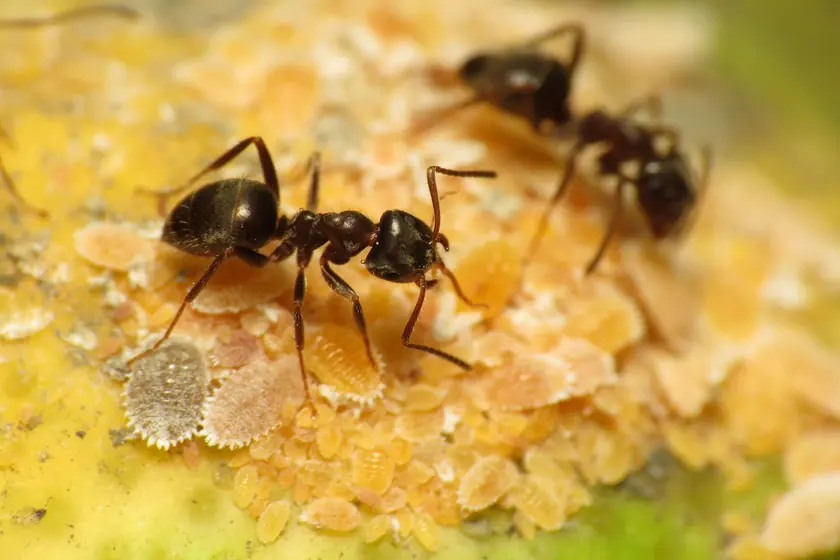
Fourmi noire des jardins (Lasius niger)
The most common

The black garden ant

  • 3 to 5 mm, matte black; it forms trails on worktops and along walls.
  • Nests outdoors (under slabs, pots, in cracks); it comes in for sugar.
  • Invasive and annoying, but harmless and damage-free: a nuisance, not a threat.
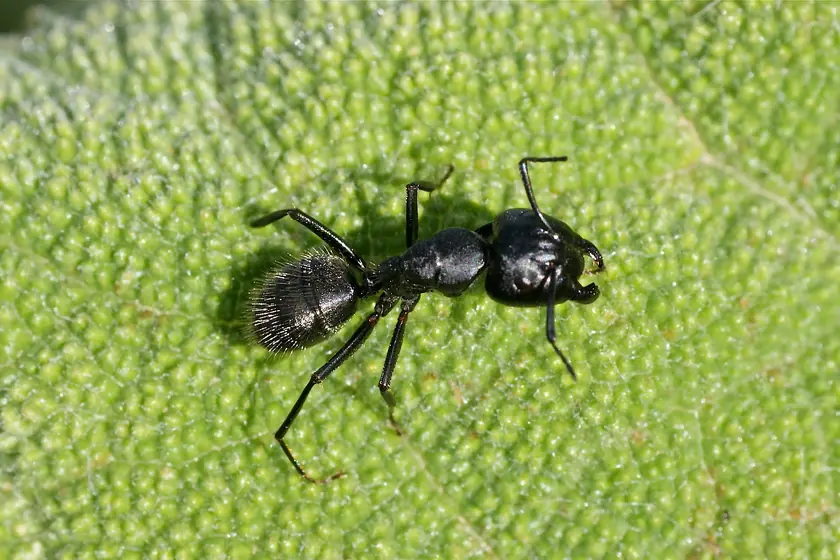
Fourmi charpentière (Camponotus) sur une feuille
The one to watch

The carpenter ant

  • Much bigger (up to ~1.5 cm), black or red-and-black, mostly active at night.
  • It tunnels into damp wood to nest — without eating it — and ejects fine sawdust.
  • Sawdust at the base of woodwork = alert: the only ant that causes structural damage in France.
02

The invasive species

Two species need a pro approach: small, with multiple queens, they split when disturbed.

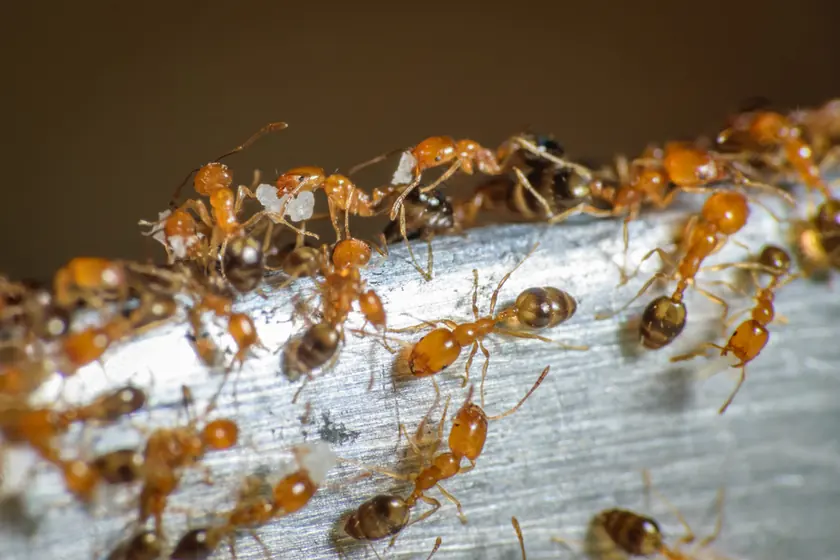
Fourmis pharaon (Monomorium pharaonis), petites et jaune clair
Indoors

The pharaoh ant

  • Tiny (2 mm), pale yellow; it survives mostly in heated buildings.
  • Several queens: disturbed, it splits its colony and spreads further.
  • A vector of bacteria — a real problem in care and catering settings.
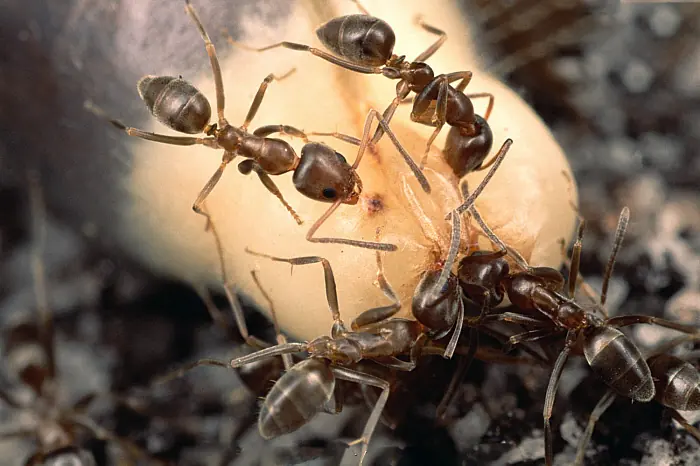
Fourmis d'Argentine (Linepithema humile) autour d'une source de nourriture
On the coast

The Argentine ant

  • Small (~2 mm), light brown; found in the south and along the Atlantic coast.
  • Forms supercolonies with multiple queens, in long unbroken trails.
  • Very hard to eradicate: one-off treatments aren't enough.
03

React the right way

Crushing the workers you see never reaches the queen. Against a colony, only one logic wins.

Bait, not spray

Target the colony
  • A delayed-action bait gel: workers carry it back to the nest and contaminate the whole colony in 5 to 15 days.
  • Never spray insecticide nearby: it kills the visible workers, cancels the bait — and, with pharaoh ants, makes the colony split.
  • White vinegar erases the pheromone trails, but the effect is temporary.

Remove what attracts them

Hygiene + access
  • Sugary food in airtight jars, clean surfaces, closed bins.
  • Seal cracks and passages; keep damp wood and log piles away from the house.
  • Carpenter ants, pharaoh ants in a building or a lasting invasion → a certified professional.
An ant trail is worth following. Follow it without crushing it: it leads you to the entry point and often to the nest. That's where the treatment is won — not on the visible workers.

Common myths

“A good spray and it's sorted.”False. You kill the workers, not the heart of the colony: the colony quickly recovers. Worse, with pharaoh ants, the spray makes it split and spread further.
“Ants eat wood, like termites.”False. The carpenter ant tunnels into wood to nest and ejects the sawdust; it doesn't feed on it. The damage to the structure, though, is very real.
“A few ants in the kitchen, no big deal.”Often true for the garden ant… but a trail can also betray a pharaoh or carpenter ant, which change everything. Identify before acting.
Target the colony, not the workers.

As long as the heart of the colony survives — one queen, or several in multi-queen species —, it rebuilds — which is why crushing and sprays fail. The right method: identify the species, cut off food sources, place a delayed-action bait that travels to the heart of the colony, then seal the entry points. For a carpenter ant (sawdust at the base of wood), a pharaoh ant in a building or an Argentine-ant supercolony, a Certibiocide-certified professional is essential: hidden nests, multiple queens and spread through ducts make DIY treatment ineffective.

?

Frequently asked questions

How do I get rid of ants in the house?
It depends on the species. For most ants, a delayed-action bait gel is more effective than a spray: the workers carry it back to the nest, where it's shared with the rest of the colony. At the same time, remove food sources and seal the entry points.
Why do I have ants at home?
Ants mainly come in looking for food, water or shelter. A scout that finds a resource leaves a pheromone trail that the other workers follow, which explains how quickly a line of ants appears.
How do I find the ants' nest?
Watch the trail without disturbing it: it often leads to the entry point and sometimes to the nest. The nest may be under a slab, in a wall, behind a skirting board, under a terrace or, for carpenter ants, in damp wood. Species such as the pharaoh ant often have several nests that are hard to locate.
How do I recognise a carpenter ant?
It's much bigger than the black garden ant, usually 6 to 15 mm, black or black and red, and it can leave very fine sawdust under the woodwork where it tunnels. It prefers damp or already damaged wood.
What's the difference between a black ant and a carpenter ant?
The black garden ant is small (3 to 5 mm) and usually nests outdoors. The carpenter ant is clearly bigger and can settle in damp wooden elements, where it tunnels galleries to build its nest.
Do ants eat wood?
No. Carpenter ants don't eat wood like termites. They only tunnel into it to build their galleries, then push the sawdust outside.
Why do ants always come back?
As long as the colony is active, new workers will keep exploring the same areas. If only the visible trail is destroyed, the colony quickly recreates one. You have to treat the colony, not just the visible ants.
Is white vinegar effective against ants?
Vinegar can erase the pheromone trails and repel ants temporarily, but it destroys neither the nest nor the colony. It's a one-off help, not a solution against an established infestation.
Are ant sprays effective?
They quickly kill the visible workers, but rarely reach the nest. For some species, notably the pharaoh ant, a spray can even fragment the colony and make treatment harder. Bait gels are generally better suited.
Are ants dangerous?
Most species found in homes are mainly a nuisance. Some can contaminate food or become a problem in sensitive settings (hospitals, catering), while carpenter ants can damage woodwork by tunnelling galleries into it.
What if ants come out of the walls or skirting boards?
Avoid spraying insecticide straight away. Try to identify the species, watch their route and place a bait gel along it. If they're coming from woodwork or return despite several treatments, a professional diagnosis is advisable.
Are winged ants a sign of infestation?
Yes. Winged ants are the colony's reproductives. Seeing a few outdoors is normal at certain times of year. But their appearance in numbers indoors can indicate that a colony is established in the building.
How do I stop ants getting into the house?
Keep food in airtight containers, clean up sugary residues quickly, empty the bins regularly and seal the cracks or passages the ants use. Prevention greatly reduces invasions.
Can ants damage a house?
Most can't. However, carpenter ants can tunnel galleries into damp or already damaged wood, and a large colony can cause damage if it stays in place for a long time.
When should I call a professional?
If the ants return despite treatments, if they come out of walls or woodwork, if you see sawdust, if the infestation affects a whole building or if you suspect a pharaoh ant, professional intervention is usually the most effective solution.
Ants moving in?

N40 identifies the species, traces the colony and treats it for good across the Landes (40) — 7 days a week, on-site quote.