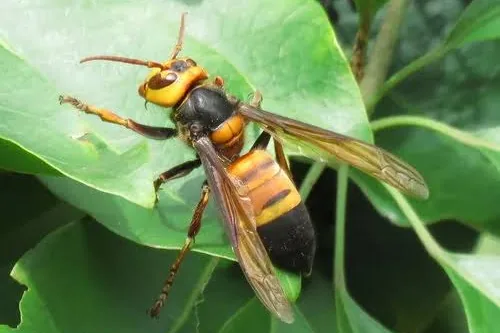
How do I recognise an Asian hornet?
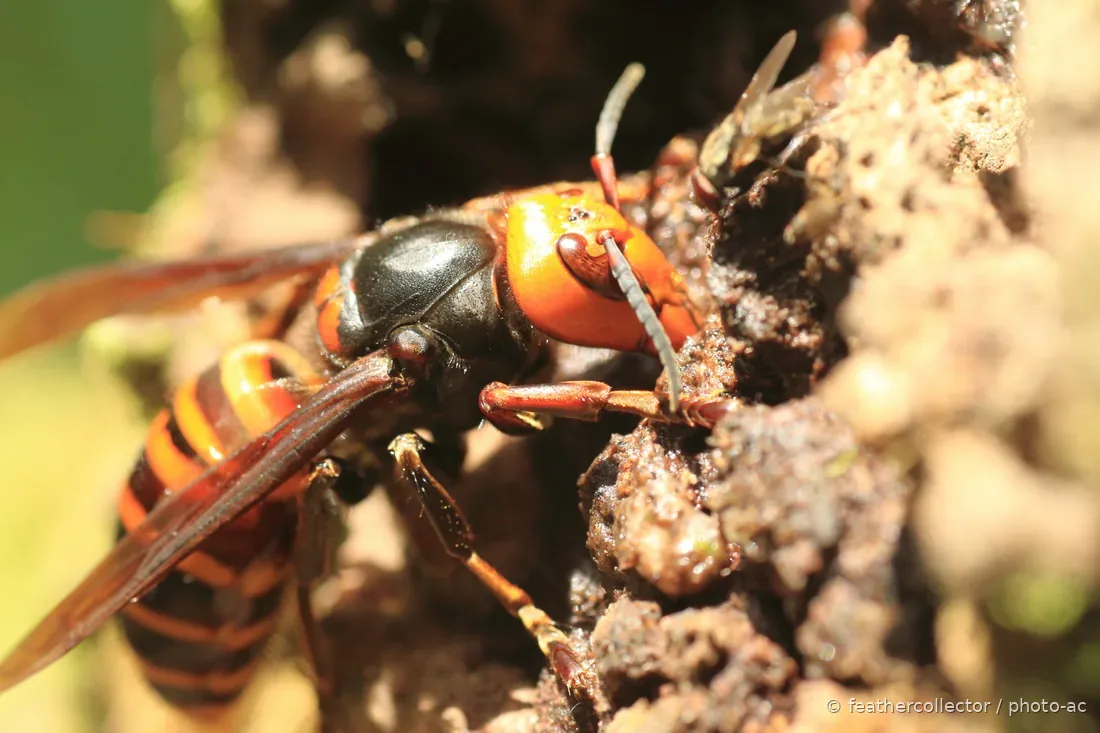
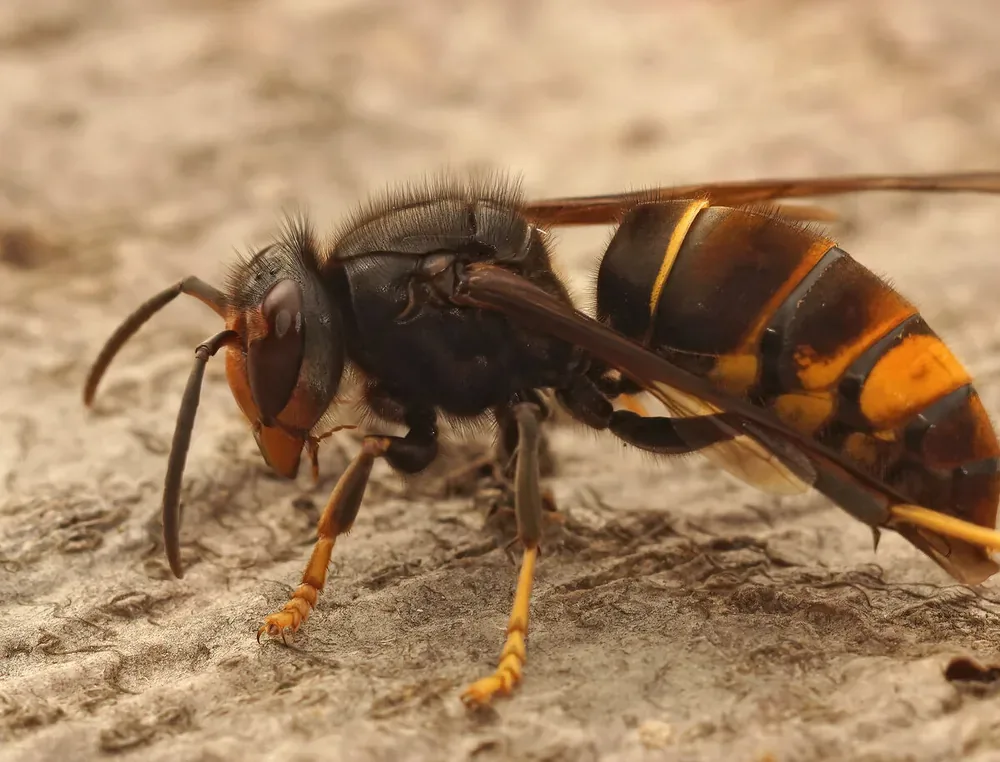
The Asian hornet is smaller than the European hornet. Its body is mostly dark, with an orange band on the abdomen and yellow leg tips. In flight it looks darker than the European hornet.
How do I recognise a European hornet?
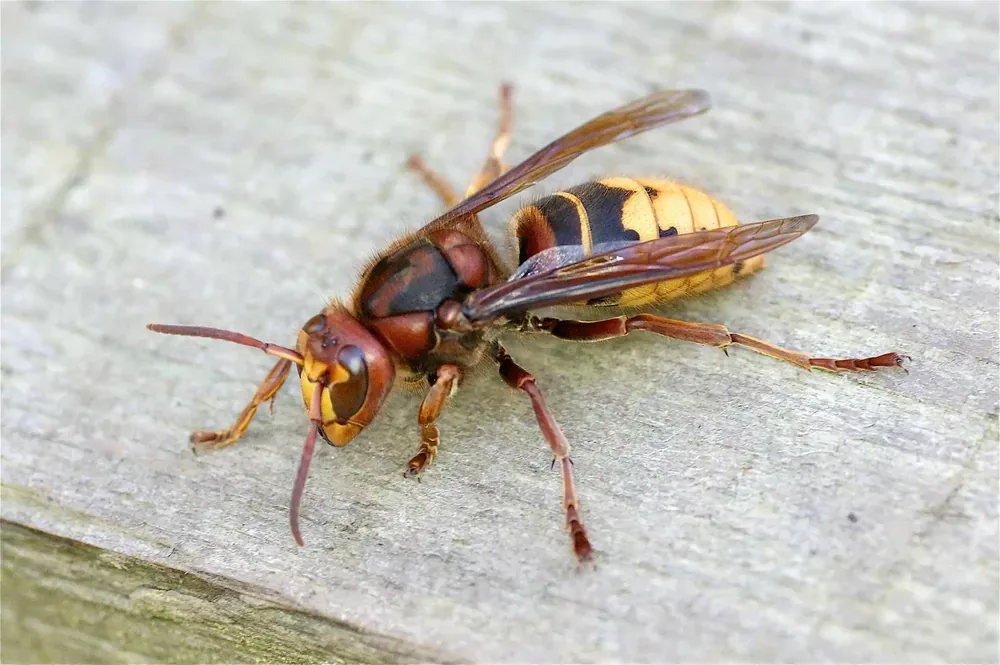
The European hornet is larger. Its abdomen is largely yellow striped with brown and its head is orange. It looks lighter and more colourful than the Asian hornet.
How do I recognise a nest?
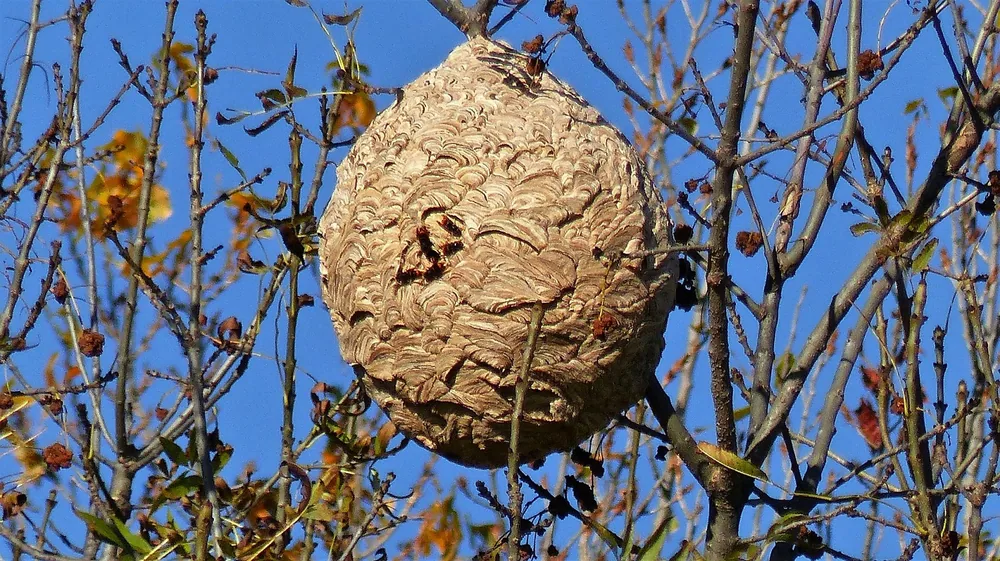
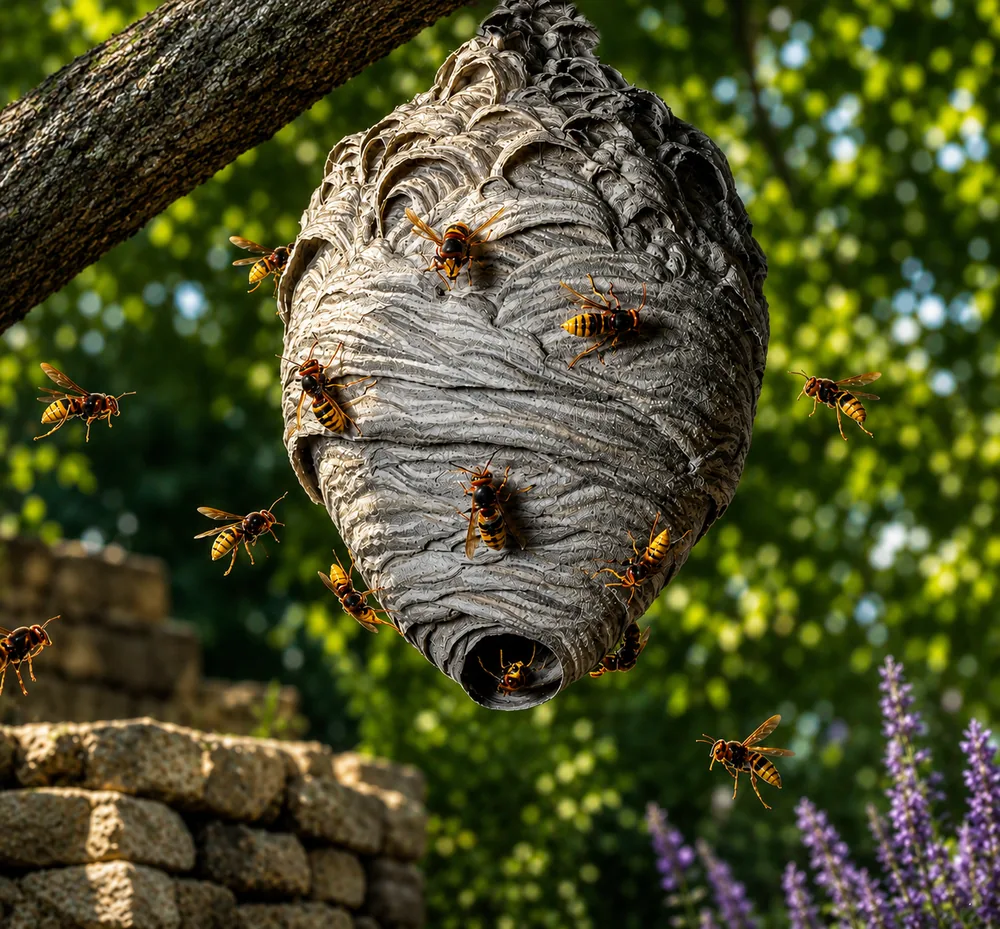
Asian hornet nests are usually spherical or egg-shaped, often set high up in trees or under a roof. Primary nests, built in spring, are smaller and located in sheltered spots (garden shed, garage, eaves). Secondary nests become much larger and are often perched in trees.
Is the Asian hornet dangerous?
No, it isn't naturally aggressive towards people. However, it actively defends its nest when it feels threatened. Stings can be dangerous in case of allergy, multiple stings or a sensitive location (face, throat...).
Is the European hornet dangerous?
Like the Asian hornet, it doesn't attack without reason. It only becomes dangerous when defending its nest. The risks are mainly linked to allergies or multiple stings.
What should I do if I find a nest?
Don't go near the nest and don't try to destroy it yourself. Keep people and pets away, then report the nest to your town hall, the local control network, or contact a professional.
How far should I stay from a nest?
Keep at least 5 metres away from a nest and to avoid any vibration, impact or attempt to destroy it.
What should I do if I'm stung?
Disinfect the sting, watch how it develops and see a doctor quickly in case of an allergic reaction, multiple stings or a sting in the mouth or throat. Call emergency services immediately if the person has breathing difficulties or feels faint.
Do hornets come back every year?
No. A colony never occupies the same nest two years running. However, a new queen may build a nest nearby if the area suits her.
Why do hornets circle around my house?
They're looking for food (insects, ripe fruit, sugary drinks) or materials to build their nest. Their presence doesn't necessarily mean there's a nest at your place.
Why does a hornet come into the house?
It may be drawn by light, food or simply come in by mistake. This doesn't necessarily mean there's a nest in the home.
Do hornets attack without reason?
No. Hornets are generally not very aggressive when away from their nest. Attacks mainly happen when they feel threatened or when their nest is disturbed.
Are hornets useful?
Yes. European hornets help regulate many insects and contribute to the balance of ecosystems. The Asian hornet is also an insect predator, but its impact on bees and biodiversity makes it an invasive species to monitor.
Should Asian hornets be trapped?
Trapping shouldn't be done systematically by individuals. Non-selective traps catch many useful insects. When trapping is recommended locally, it must be targeted, time-limited and use selective equipment. Check with your town or the body in charge of Asian hornet control.
What happens to a nest in winter?
With the arrival of winter, the colony dies out. The nest is abandoned and won't be reused the following year. Only young fertilised queens survive, overwintering in a shelter before founding a new nest in spring.
Do firefighters still destroy nests?
It depends on the department. In many areas, firefighters no longer intervene at private homes except in case of immediate danger or when the nest is on public land. The work is generally handed to specialised companies. Check with your town hall.
Combien de piqûres de frelon peuvent tuer un humain ?
Il n'y a pas de chiffre unique, cela dépend de la personne. Chez un adulte non allergique, le venin devient dangereux à partir de plusieurs dizaines de piqûres : la dose létale est estimée autour de 100 à 150 piqûres pour un frelon européen ou asiatique, avec des complications graves possibles bien avant. Le frelon géant asiatique (
Vespa mandarinia) est plus dangereux : des décès sont documentés dès 30 à 70 piqûres. Surtout, chez une personne allergique,
une seule piqûre peut suffire à provoquer un choc anaphylactique. En cas de piqûres multiples, de gêne respiratoire ou de malaise, appelez immédiatement le 15 ou le 112. Chiffres indicatifs — voir
le tableau comparatif plus haut.
Combien de piqûres de guêpe peuvent tuer un humain ?
Les décès dus au seul venin sont exceptionnels. Chez un adulte non allergique, la dose létale est estimée autour de 100 à 150 piqûres, des complications pouvant survenir avant. Le vrai danger reste l'allergie :
une seule piqûre peut suffire à déclencher une réaction grave chez une personne sensible. Appelez le 15 ou le 112 en cas de piqûres multiples, de piqûre à la bouche ou à la gorge, de gêne respiratoire ou de malaise. Chiffres indicatifs — voir
le tableau comparatif.
Combien de piqûres d'abeille peuvent tuer un humain ?
L'abeille injecte peu de venin et meurt après avoir piqué, mais son venin est plus toxique au milligramme. Chez un adulte non allergique, la dose létale est estimée entre 500 et 1 000 piqûres, avec des complications graves possibles dès 50 à 100 piqûres : le vrai risque, ce sont les attaques massives d'un essaim. Là encore, chez une personne allergique,
une seule piqûre peut suffire. En cas de piqûres multiples ou de réaction, appelez le 15 ou le 112. Chiffres indicatifs — voir
le tableau comparatif.


 Invader