N40NUISIBLE 40
← Back to site

Identification guide

Flies: target the breeding site,
not the flies

What to do first

Lots of flies at once = a breeding site nearby. A fly swatter fixes nothing: you have to find and remove the source.

01

Recognise the species

Not all flies look alike: the two species most often found in homes aren't drawn to the same things.

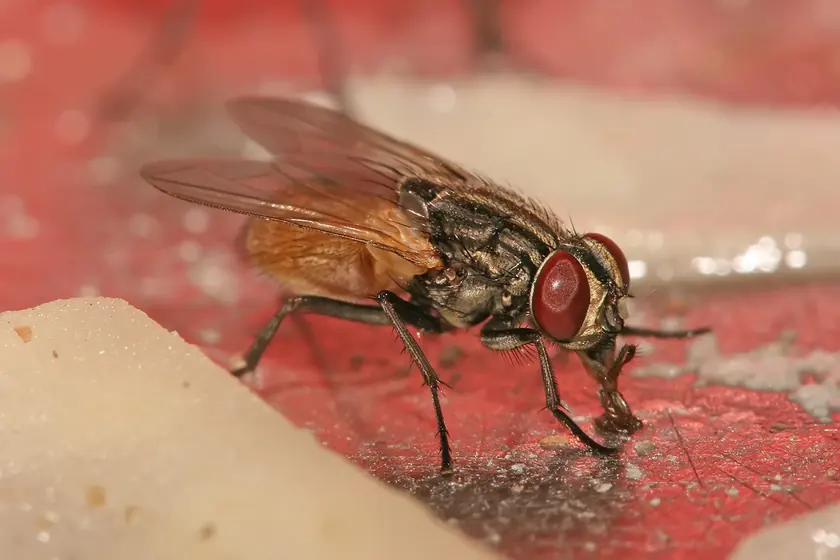
Mouche domestique (Musca domestica) grise aux yeux rouges
The most common

The house fly

  • Musca domestica: grey, 5 to 8 mm, dark-striped thorax, red eyes, hairy body.
  • Attracted to waste, leftovers and sugar; this is the one buzzing in the kitchen.
  • A female lays hundreds of eggs; the egg-to-adult cycle takes 7 to 10 days in summer.
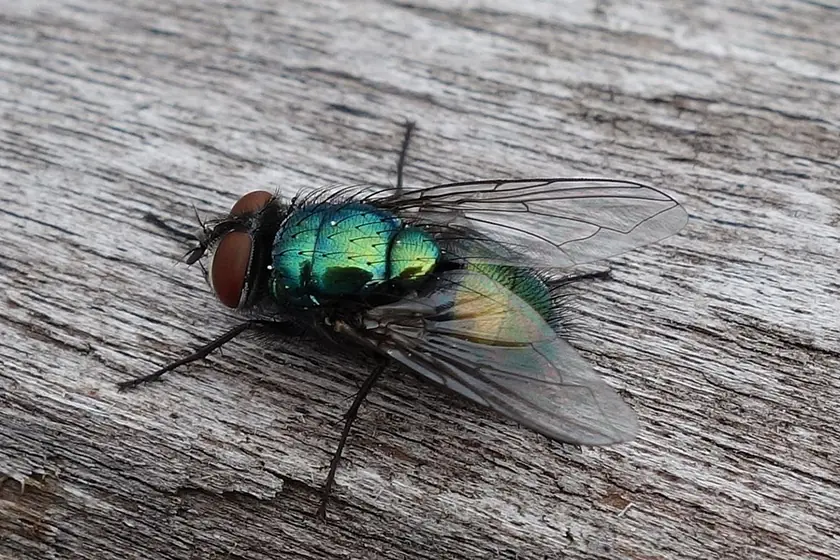
Mouche à viande à l'abdomen vert métallisé (calliphoridé)
The bluebottle

The blow fly

  • Calliphora: bigger (10 to 14 mm), metallic blue or green abdomen, hairy body, big red eyes.
  • Attracted to meat, fish and decaying animal matter; it comes in to lay its eggs.
  • Its presence often signals a hidden source: a small dead animal, a forgotten bin.
02

The health risk

Ordinary-looking, the fly is a genuine vector: it goes from waste to your food in an instant.

A vector

From the bin to the plate

  • It lands on waste, excrement and decaying matter, then on your food and surfaces.
  • It contaminates through its feet, its droppings and its saliva (it regurgitates to dissolve food).
  • It can carry bacteria that cause food poisoning (salmonella, E. coli).
Why fast action matters

Explosive breeding

  • The cycle is so short that a few flies become a swarm in one to two weeks if a breeding site exists.
  • The larvae (maggots) develop in warm, moist organic matter.
  • Acting on adults alone is useless: without removing the source, the population bounces back.
03

Remove the source

The only strategy that lasts: remove what feeds and breeds them, then block the way in.

Remove the breeding sites

Start with the source
  • Closed bins emptied often, organic waste managed, clean worktops.
  • Hunt down hidden sources: animal droppings, decaying matter, a dead rodent, a clogged drain.
  • No accessible organic matter = no egg-laying = no new generation.

Block entry and monitor

Barriers + follow-up
  • Window screens, strip curtains for premises, traps (UV lamps, sticky boards).
  • Covered food, rinsed pet bowls, joints and vents in good condition.
  • A settled infestation or a sensitive site (catering, livestock) → a professional, with follow-up.
Lots of bluebottles at once? Look for an animal source: a small dead animal in a wall, under a floor or in the attic. As long as it's there, they'll keep coming back.

Common myths

“A few flies, it'll go away on its own.”False. In summer, a small breeding site can produce a new generation of flies in 7 to 10 days. Without removing the source, their numbers rise very fast.
“A fly is just annoying.”False. By going from waste to food, it carries bacteria: it's a matter of hygiene and health too.
“A fly swatter or a bomb is enough.”False. You kill the visible adults, not the larvae or the source. Without removing it, the population rebuilds.
Remove the breeding site, not just the flies.

A fly invasion always signals a breeding site nearby — waste, organic matter, sometimes a hidden dead animal. As long as that site isn't removed, killing the adult flies only reduces their numbers temporarily. The method that lasts: identify and remove the source, prevent egg-laying (hygiene, waste management), then block the entries and trap. For a settled infestation or a sensitive site — catering, livestock, bin room — a professional locates the sources, treats and follows up.

?

Frequently asked questions

Where do the flies in my house come from?
They come in through an opening (window, door, vent), drawn by food or the smell of waste. But a sudden, large presence almost always signals a breeding site nearby: a bin, decaying organic matter, sometimes a dead animal.
Why do I suddenly have a lot of flies?
Because a generation has just emerged. With a very short egg-to-adult cycle in warm weather, a few flies can become a swarm within one to two weeks if a breeding site exists nearby.
How do I get rid of flies?
By removing the source, not just the adults. Find and eliminate the breeding site (waste, organic matter), close the bins, clean the surfaces, then block the entries (window screens) and set traps.
Are flies dangerous?
They don't bite, but they land on waste, excrement and decaying matter before landing on food. In this way they can carry bacteria and pose a risk of food contamination.
How do I recognise a blow fly?
The blow fly (or bluebottle) is clearly bigger than the house fly and its abdomen is a shiny metallic blue or green. It's drawn to meat, fish and decaying animal matter.
Why do I have big blue flies in the house?
Their repeated presence often signals a hidden animal source: a small dead animal in a wall, under a floor, in the attic or a chimney. Until the source is removed, they'll keep coming back.
How long does a fly live?
An adult house fly generally lives a few weeks. Its breeding capacity, however, is very high, which explains how fast infestations develop.
Where do flies lay their eggs?
In moist, decaying organic matter: food waste, the bottom of bins, compost, animal droppings, clogged drains. The larvae (maggots) develop there before becoming adults.
Do flies lay eggs on food?
Yes, some species can lay eggs on exposed food, especially meat, fish or food waste. It's best to throw away any food on which eggs or maggots are visible.
How long does it take a maggot to become a fly?
In summer, development is fast: depending on the species and the temperature, a few days are enough for the larvae to become adult flies. The warmer it is, the faster the cycle.
Why are there maggots in my bin?
Because a fly laid eggs there. Maggots are the larvae. Empty and clean the container, then keep it closed to prevent any new egg-laying.
Is a fly swatter or an insecticide bomb enough?
No. They kill the visible adults but reach neither the larvae nor the breeding site. Without removing the source, the population rebuilds within a few days.
Are UV insect lamps effective?
They can catch some of the flies in an enclosed space, but they don't solve the underlying problem. They complement hygiene and removing the breeding sites; they don't replace them.
Why do flies land on food?
They feed by regurgitating saliva to dissolve food before sucking it up. It's this contact — feet, saliva, droppings — that creates the hygiene problem.
How do I stop flies getting in?
Window screens, well-fitted doors, vents and seals in good condition. At the same time: closed bins, covered food, clean worktops and rinsed pet bowls.
Do flies disappear in winter?
Their activity drops sharply with the cold. Some survive sheltered in heated buildings and become active again as soon as the warmth returns.
When should I call a professional?
If the infestation persists despite cleaning, if you can't find the source, if flies come out of a wall or false ceiling, or if it's a sensitive site (catering, livestock, bin room). The professional locates the breeding sites, treats and follows up.
A fly invasion?

N40 locates the breeding sites, treats and sets up follow-up across the Landes (40) — 7 days a week, on-site quote.