N40NUISIBLE 40
← Back to site

Identification guide

Bed bugs: spot them
before they settle in

What to do first

Bumps lined up + tiny black spots in the mattress seams = bed bugs.

01

Recognise the insect

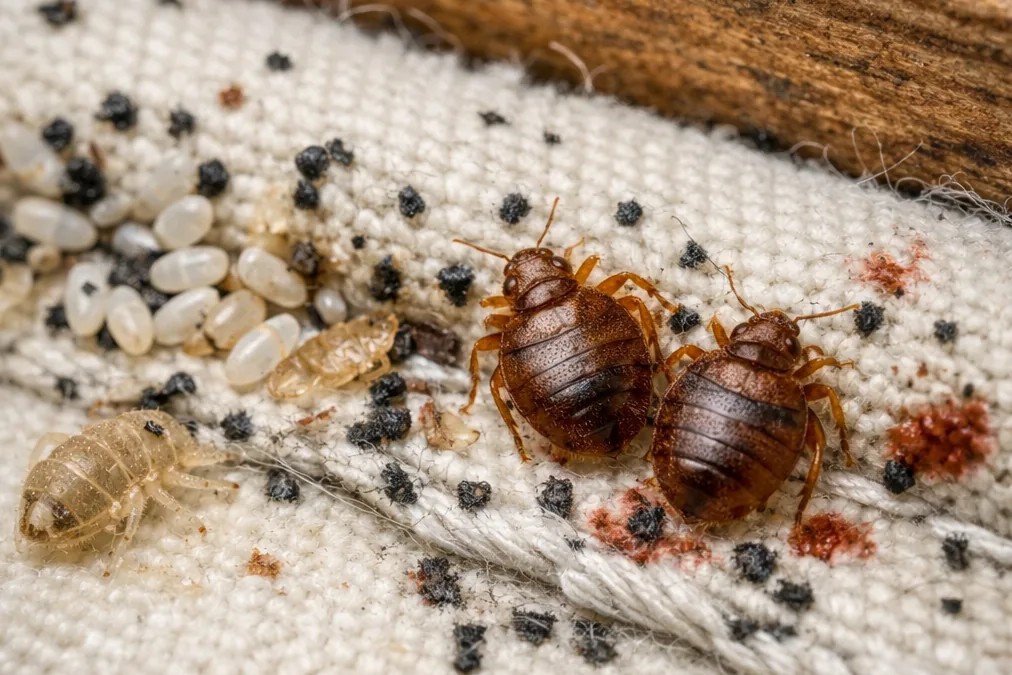
Punaises de lit adultes (Cimex lectularius) sur une couture de matelas, avec œufs, mues translucides et taches noires
Visible to the naked eye

The adult bug

  • Oval and flattened, the size of an apple seed — 4 to 7 mm.
  • Light brown when unfed, red-brown and swollen after a blood meal.
  • It doesn't fly and doesn't jump: it moves by walking.
  • Feeds only on blood, at night, but never lives on the human body.
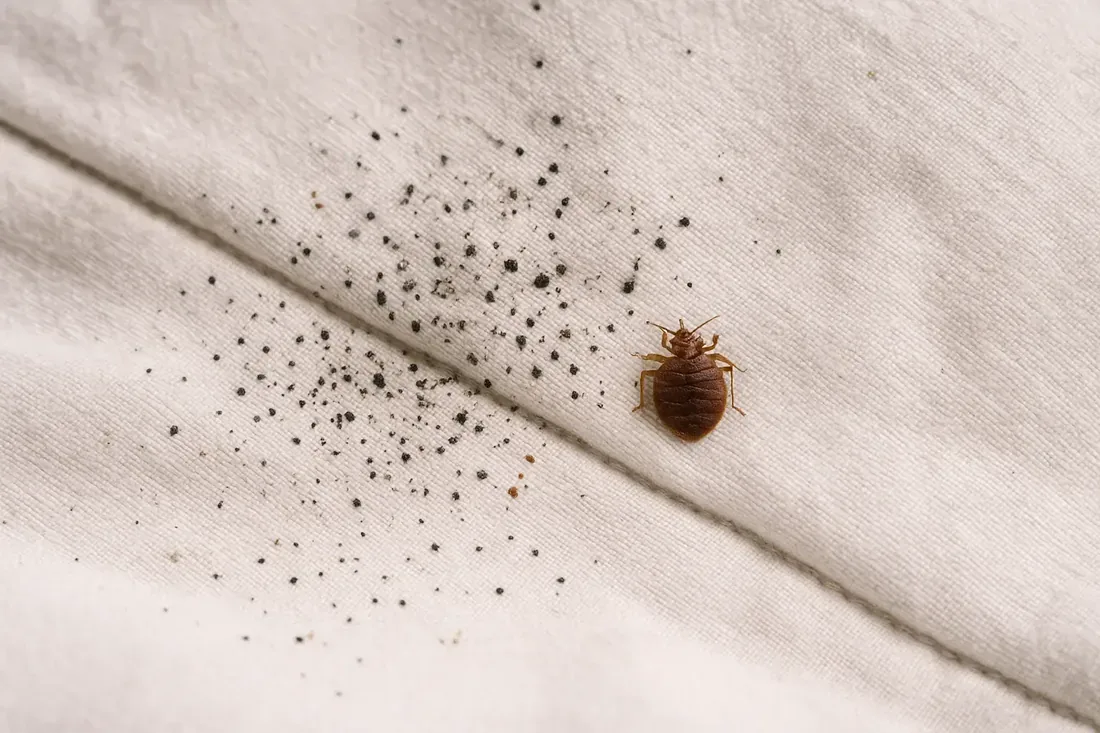
Traces de punaises de lit sur un tissu : nombreuses taches noires (déjections) et une punaise adulte
Signs to look for

What it leaves behind

  • Tiny black spots (1 to 3 mm) in the mattress seams, box spring, slats and skirting boards — its droppings.
  • Blood streaks on the sheets, from bugs crushed during sleep.
  • Translucent shed skins and minuscule whitish eggs.
  • Adult bed bugs are visible to the naked eye. Their presence is confirmed by spotting insects.
02

Recognise the bites

Bites are often the first signal — but not proof on their own: some people show no skin reaction at all. Inspecting the home remains essential.

Piqûres de punaises de lit sur la peau : boutons rouges regroupés et alignés

Bed bug bite

  • Red, raised bumps, often clustered or lined up.
  • On areas left uncovered during sleep.
  • Frequent itching.
Bumps appear from a few hours to several days later.
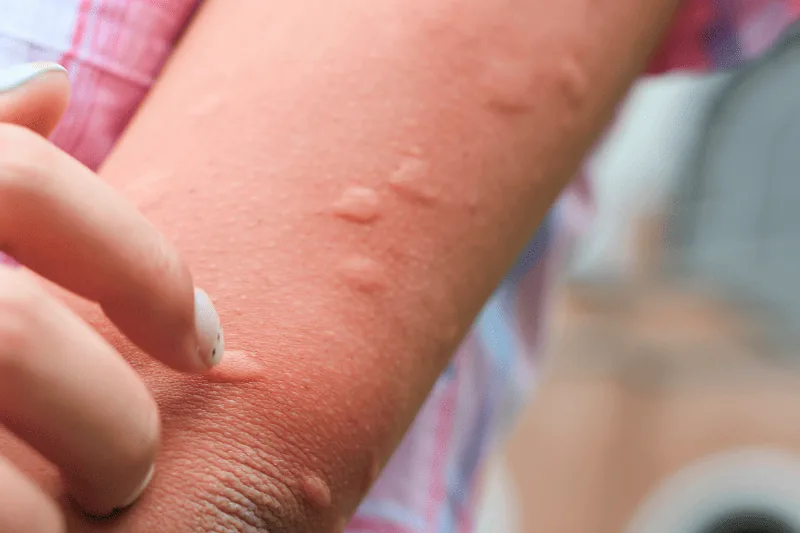
Piqûres de moustique sur un bras : boutons isolés en relief

Mosquito bite

  • Usually a single bump, immediate itching (within minutes).
  • Leaves no trace in the room (no black spots, no shed skins).
A mosquito is felt right away; a bed bug goes unnoticed but leaves clues in the room.
03

Where they hide

Near where you sleep, away from the light. They survive several months without feeding — so inspect everything, not just the bed.

Near the bed

Start here

Mattress seams and hems, label, side handles; box spring, slats, frame and headboard. This is where the first traces show up.

Beyond the bed

Advanced infestation

Skirting boards, wall corners, behind frames, sockets and switches; bedside table, clothes, luggage. They spread outward as the population grows.

In doubt? Don't move your belongings. Carrying a mattress, luggage or clothes from room to room spreads the infestation. Seal suspect laundry in a closed bag, wash what can be washed at 60 °C or tumble-dry it on high heat, and have a professional confirm before any treatment.

Common myths

“It's a cleanliness problem.”False. No link with hygiene or income: 11 % of French households were affected between 2017 and 2022 (ANSES). They're most often brought back from a trip — nearly 40 % via a hotel or rental — or from a second-hand purchase.
“No bumps, so no bugs.”False. Some people show no skin reaction at all, and the reaction can be delayed several days. Only inspecting the home — seams, box spring, skirting boards — can confirm it.
“A store-bought spray will fix it.”False and risky. Many French populations show strong resistance to insecticides, especially pyrethroids; misused, these products can scatter the bugs and make them harder to eliminate. Wash what can take 60 °C (or tumble-dry on high heat), steam and vacuum first, then a certified professional.
Caught early, cleared fast.

Two thirds of households get rid of them in under two months when they act quickly (ANSES). The longer you wait, the further it spreads and the heavier and costlier the treatment. At the slightest doubt, better to get a diagnosis than to let it run.

?

Frequently asked questions

How do I recognise a bed bug?
An oval, flattened insect the size of an apple seed (4 to 7 mm), light brown to red-brown. It neither flies nor jumps and usually hides near where you sleep.
Do bed bugs live in the mattress?
Yes — they hide mainly in the seams, hems and labels of the mattress, as well as in the box spring, the frame and the headboard. They don't usually live inside the mattress itself unless it's damaged.
Do bed bugs live in clothes?
Not usually. They prefer dark, narrow hiding spots such as mattress seams, the box spring or the bed frame. However, they can hide temporarily in clothes, laundry or luggage and be carried from one place to another.
Do bed bugs jump or fly?
No. They neither jump nor fly: they move only by walking. They travel mainly via luggage, clothes and furniture.
How do I tell a bed bug bite from a mosquito bite?
Bed bug bites form red bumps, often clustered or lined up, on areas left uncovered during sleep, and can appear from a few hours to several days later. Mosquito bites are more often isolated and the reaction is usually faster.
Why am I the only one getting bitten at home?
Reactions vary greatly from person to person: some develop no visible skin reaction despite being bitten. So the absence of bumps doesn't prove the absence of bed bugs.
Do bed bugs transmit diseases?
To date, they are not considered disease vectors in humans. The main problems are itching, the risk of secondary infection from scratching, and the impact on sleep and morale.
Are bed bugs a sign of poor hygiene?
No. Their presence has no link with cleanliness or income. They're most often brought back from a trip, a rental or a second-hand purchase.
Do bed bugs die from cold or heat?
They are sensitive to extreme temperatures. Heat (laundry at 60 °C, hot tumble-drying or professional heat treatment) eliminates them effectively. Cold can also kill them, but only after a long enough exposure to very low temperatures.
What should I do if I think I have bed bugs?
Avoid moving your belongings from room to room. Inspect the mattress seams, the box spring and the bed frame for bugs, droppings, shed skins or eggs. If in doubt, have the infestation confirmed before starting any treatment.

Suspect an infestation?

N40 diagnoses and treats bed bugs across the Landes (40) — discreetly, 7 days a week, on-site quote.