N40NUISIBLE 40
← Back to site

Identification guide

Rats & mice: spot the signs
before an infestation

What to do first

Rice-grain droppings = mouse. Olive-grain = rat. Either way, act fast.

01

Common species

Four rodents turn up most often — two rats, two “mice”. Recognising them helps target the treatment.

Surmulot ou rat brun (Rattus norvegicus)
The most common

The brown rat

  • Rattus norvegicus — the species most people think of as “rat”.
  • Stocky, brown-grey, rounded snout, small ears; a good swimmer, it digs burrows.
  • Lives mostly at ground level: sewers, cellars, garages, gardens, henhouses, farm buildings — but it can climb if needed.
  • It's the one we most often deal with on the job.
Rat noir (Rattus rattus) sur une charpente en bois
The climber

The black rat

  • Rattus rattus — slimmer and darker, with a tail longer than its body.
  • An excellent climber: it lives up high.
  • Attics, roofs, roof timbers, warehouses, trees.
  • Noises in the attic at night? Think of this one.
Souris grise (Mus musculus) posée sur une pierre couverte de mousse
The most common indoors

The house mouse

  • Mus musculus — the house mouse, small, with large ears.
  • Kitchen, false ceilings, walls, garages, storerooms.
  • Very curious and agile; a 6 mm hole is enough for it to get in.
  • The rodent most commonly found inside homes.
Mulot sylvestre (Apodemus sylvaticus) aux grands yeux et grandes oreilles
The mouse look-alike

The wood mouse

  • Apodemus sylvaticus — often mistaken for a house mouse.
  • Recognisable by its very large eyes, big ears and white belly.
  • Garages, sheds, barns, gardens and houses near woodland.
  • Big eyes + white belly = wood mouse, not house mouse.
02

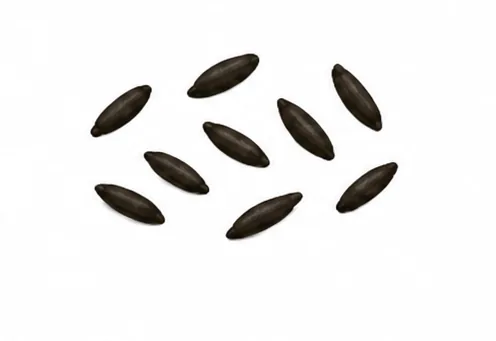
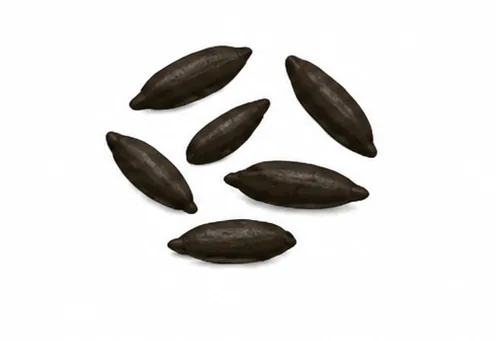
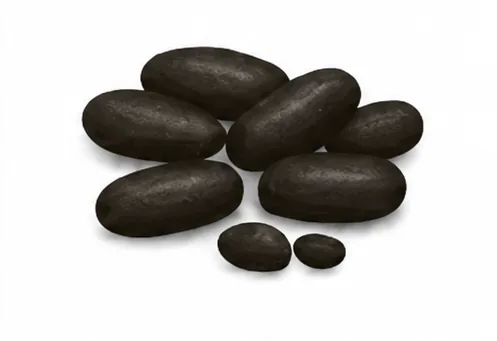
Identifying droppings

Often the first visible clue, and the most reliable for telling the type of rodent apart.

Mouse droppings

Mus musculus
Crottes de souris (Mus musculus)
  • Size: 3 to 6 mm long
  • Shape: thin, with pointed ends
  • Quantity: a mouse produces 50 to 80 per day

Roof rat droppings

Rattus rattus
Crottes de rat noir (Rattus rattus)
  • Size: 10 to 15 mm long
  • Shape: spindle-shaped, with pointed ends
  • Quantity: a rat produces 40 to 50 per day

Norway rat droppings

Rattus norvegicus
Crottes de rat brun (Rattus norvegicus)
  • Size: large, 12 to 20 mm long
  • Shape: thick and capsule-shaped, with blunt, rounded ends
  • Quantity: similar to the roof rat (~40 per day)
⚠ Never handle droppings with bare hands. As they dry, they can transmit diseases (leptospirosis, salmonellosis). Ventilate, protect yourself, and don't dry-sweep — inhaling contaminated dust is a risk.
03

The unmistakable signs

Beyond droppings, a settled infestation leaves other traces.

What they leave

Along skirting boards
  • Dark grease marks along walls and skirting boards — their repeated runs.
  • Packaging, wood, plastic and even gnawed electrical cables — a fire risk.
  • Nests of shredded material, damaged food stores.

What you'll notice

Mostly at night
  • Scratching and scurrying in the walls, attic and false ceiling.
  • A persistent ammonia (urine) smell once the infestation is settled.
  • A rodent seen in broad daylight = an already advanced infestation.
Can't see the animal? That's normal. Rats and mice are nocturnal and discreet. It's their traces — droppings, grease, noises, gnawing — that give them away, often well before you spot one.

Common myths

“A cat is enough.”False. A cat can deter and helps as prevention, but it won't clear a colony that's already settled.
“Mice don't go upstairs.”False. They're excellent climbers: an infestation that starts in the cellar soon reaches the attic.
“Expanding foam to plug the holes.”False: they gnaw through it. Only metal, wire mesh or well-packed steel wool hold up over time.
Seal, sanitise, trap.

The method that lasts combines three moves: cut off access (steel wool and metal over holes), remove food (airtight containers, closed bins) and trap in the right places. Rodents breed fast — a female can have 5 to 10 young per litter, several times a year. At the first clue, act: the longer you wait, the bigger the colony and the greater the damage. If activity persists, if there are noises in the attic or in a sensitive setting, call a professional.

?

Frequently asked questions

How do I know if I have rats or mice?
Rodents rarely show themselves. The first clues are their droppings, gnaw marks, noises in the walls or attic, grease marks along their runs and sometimes a persistent smell of urine. The earlier an infestation is spotted, the easier it is to treat.
How do I recognise mouse and rat droppings?
Mouse droppings are small (3 to 6 mm), thin and pointed at the ends. Rat droppings are much bigger (10 to 20 mm depending on the species) and generally thicker. Fresh, shiny, soft droppings indicate recent activity.
What are the first signs of an infestation?
Even before seeing an animal, you often notice droppings, gnawed packaging or cables, scratching at night, grease marks along the walls, and a smell of urine once the infestation is established.
Are rats and mice dangerous to health?
Yes. They can contaminate food and transmit certain diseases through their urine, droppings or parasites. It's recommended never to handle their droppings with bare hands and to avoid dry-sweeping them.
Can mice go upstairs?
Yes. They're excellent climbers. They use service ducts, partition walls, pipes or cables to reach the attic or upper floors.
Is a cat enough to clear an infestation?
No. A cat may catch a few individuals and deter some rodents, but it removes neither the nests, nor the entry points, nor a colony that's already established.
Are ultrasonic repellers effective?
Their effectiveness is limited. They may disturb rodents for a few days, but the animals often end up getting used to them. Sealing entry points, removing food and trapping remain the most effective methods.
What's the smallest hole a mouse can get through?
A mouse can slip through a hole of about 6 mm, roughly the thickness of a pencil. A rat needs a bigger opening, usually around 20 mm. That's why sealing entry points is essential.
Why do I hear scratching in the walls?
Rodents are mostly active at night. The scratching is them moving through partition walls, false ceilings or the attic as they look for food or build their nest.
What should I do if I find rats or mice at home?
Start by identifying the entry points, store all food in closed containers, set traps along their runs and seal the openings with rodent-proof materials. If the signs persist or increase, call a professional.
Why do I have rats or mice at home?
They're looking for three things: food, water and shelter. A simple gap under a door, a hole around a pipe or a poorly closed bin can be enough to attract them.
How fast do rats and mice reproduce?
Very fast. A female can have several litters a year. So a small presence can become an infestation within a few months if nothing is done.
Do rats only live in sewers?
No. The brown rat frequents sewers, but it also lives in cellars, garages, gardens, warehouses or farm buildings. The black rat prefers heights, such as attics and roof timbers.
Do essential oils or mint drive rodents away?
Their effect is temporary at best. They never replace sealing entry points or trapping, and they can't clear an established infestation.
Do rats attack humans?
Normally, no. Rats avoid people and flee whenever they can. However, they may bite if cornered, injured or handled.


Rats or mice at home?

N40 identifies the species, locates the runs and treats the infestation across the Landes (40) — 7 days a week, on-site quote.