How do I get rid of moles?
The reference method remains mechanical trapping, set in an active tunnel — not in the molehill itself. Repellents, ultrasound and home remedies have a temporary effect at best. First of all, check that it really is a mole and not a vole: the treatment isn't the same.
Is the mole a protected species?
No, the European mole is not a protected species. Nor is it listed as “likely to cause damage” (ESOD) in France. Trapping it on your own land remains possible, but it falls within the regulatory framework for trapping and must stay selective: the hedgehog, for its part, is a protected species.
Does the mole eat my vegetables?
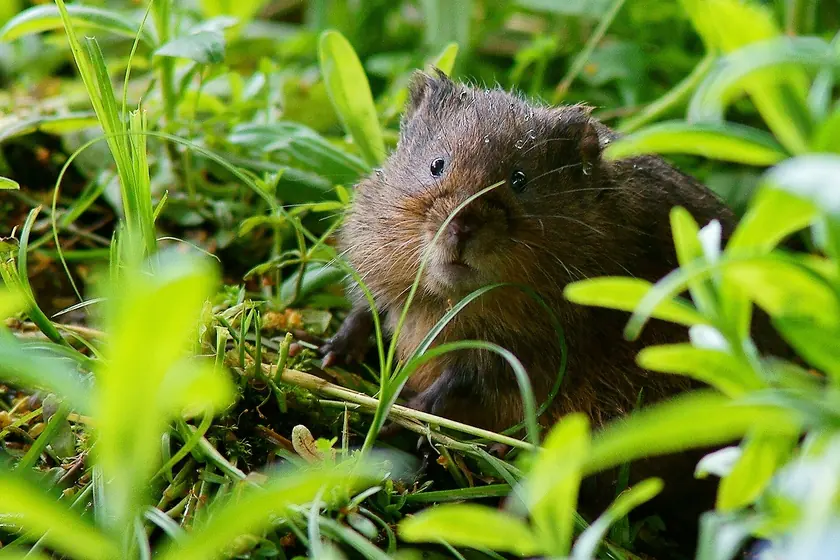
No. It's strictly carnivorous: earthworms, larvae and other invertebrates. While digging, it can loosen roots and leave a young plant to dry out, but it doesn't eat them. Gnawed roots or bulbs point strongly to a vole.
How do I tell a mole from a vole?
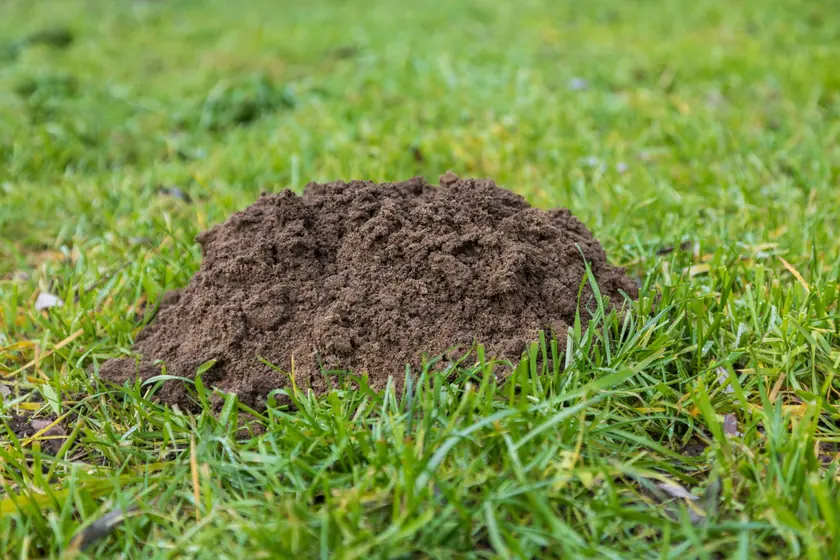
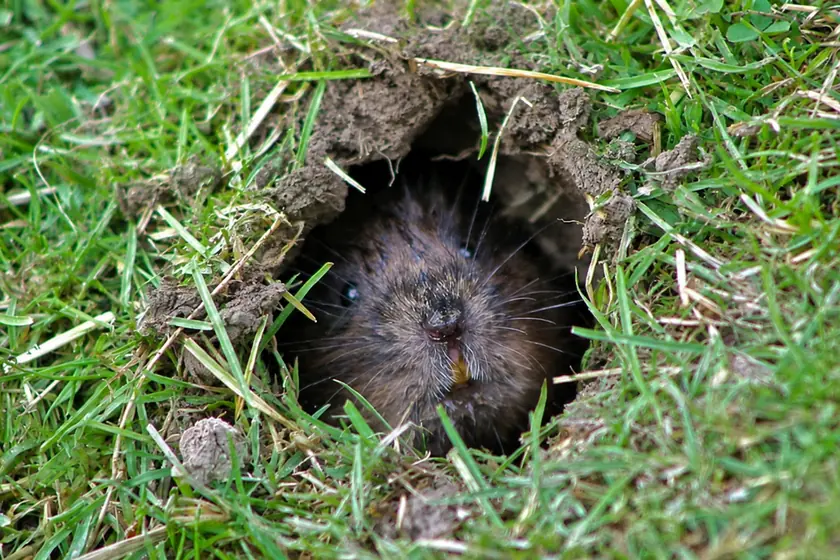
The molehill is a cone of fine, loose soil, with no visible hole. The vole leaves flatter, more irregular mounds, mixed with plant debris, with a hole often on the side. And above all: the mole doesn't gnaw plants, the vole gnaws roots and tubers.
How many moles are in my garden?
Probably far fewer than you think. The mole is solitary and territorial: a single animal, digging its network, can produce dozens of molehills. A garden covered in mounds often hosts only one or two moles.
Do moles live in families?
No. The mole is a solitary, territorial animal. Each individual maintains its own tunnel network and rarely tolerates another, except during the breeding season. That's why a garden covered in molehills often hosts only one or two moles.
How many molehills can one mole make?
A single mole can produce several dozen molehills, sometimes a hundred or more over the months. That doesn't mean there are several animals: the mole is solitary and territorial. It maintains a vast tunnel network that can reach around 200 to 300 metres in length, and each new tunnel can give rise to one or more molehills. That's why a garden covered in mounds often hosts just one mole, sometimes two.
How do I know if a tunnel is still active?
Fill in a molehill or flatten it, then come back the next day. If the soil has been pushed up again, the tunnel is active. This check is what tells you where to set a trap — on a used tunnel, not a dead end.
Do ultrasound and repellents work?
Their effectiveness isn't shown to last. The animal goes around the area, moves its tunnels, then gets used to it. Plant brews, so-called “mole plants”, bottles on sticks and ultrasonic devices may shift the problem for a few days — sometimes to the neighbour's — without solving it.
Are mole bangers and smoke bombs allowed?
Chemical products and pyrotechnic devices are not authorised control methods for private individuals, and they pose risks to other species and to the environment. Their effect is also often nil: the mole blocks its tunnel and comes back.
Can you catch a mole alive and release it?
Tube traps exist that catch the animal alive. They require very frequent checking, otherwise the animal dies of hunger or stress. And a mole released elsewhere competes with those already established: its chances of survival are low.
How do I get a mole out of its hole?
You don't. The mole is a strictly underground animal, adapted to life below ground; it very rarely comes up to the surface. Every method promising to “drive it out” (water, noise, smoke) is groundless.
Are moles blind?
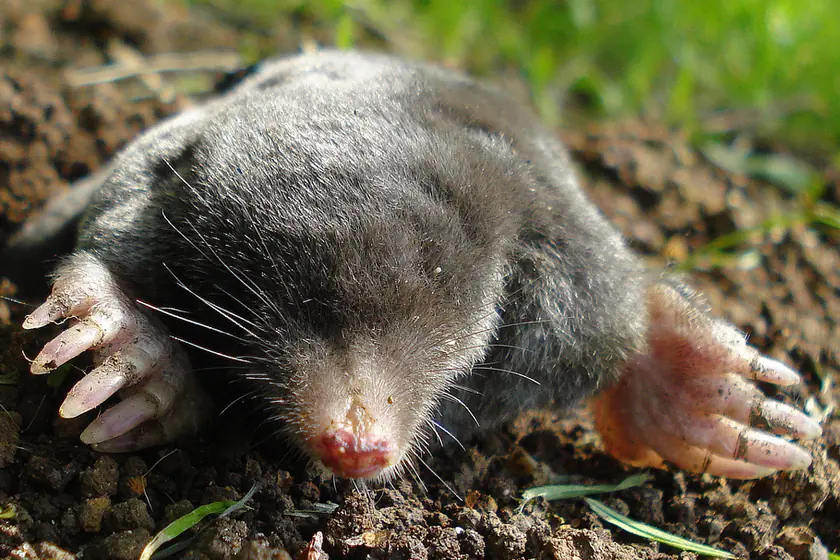
Not entirely. The mole's eyes are very small and its sight is limited, but it can tell light from dark and detect nearby movement. Underground, it finds its way mainly through smell, touch and hearing.
Do moles bite?
Yes, a mole can bite, but this remains exceptional. It's a wild animal that prefers to flee and lives almost entirely underground. It doesn't seek to attack people. However, if it's caught or handled with bare hands, it can defend itself by biting with its very sharp teeth. In practice, bites are rare, because it's exceptional to have a mole in your hands.
Can a cat or dog solve the problem?
Occasionally a cat catches a mole that ventures to the surface. This stays rare and doesn't reduce a population: the animal lives underground, out of reach. A dog that digs will do more damage to your lawn than the mole itself.
When do molehills appear?
Mainly from autumn to spring, with a marked surge in late winter, when the mole extends its network. In summer, activity is less visible at the surface: the animal digs deeper, where the soil stays damp and the worms are.
Is the mole useful?
Partly, yes. It aerates the soil, improves water infiltration and eats larvae. The real trade-off depends on how the land is used: on a lawn, the nuisance is mainly cosmetic. On a hay meadow, a green or a sports field, molehills cause real losses — soil in the fodder, wear on machinery.
How do I stop moles coming back?
A cleared plot is often recolonised, because it remains attractive. You can protect a specific area (vegetable patch, flower bed) with buried fine-mesh wire netting, but no barrier protects a whole plot for long. Monitoring and occasional trapping remain the most realistic answer.
When should I call a professional?
If you're not sure of the species, if the damage affects crops, a meadow or an orchard, if trapping has no effect, or if you want to avoid setting mistakes. A professional identifies the animal, sets the traps within the legal framework and follows up.